797. 所有可能的路径
给你一个有 n 个节点的 有向无环图(DAG),请你找出所有从节点 0 到节点 n-1 的路径并输出(不要求按特定顺序)
二维数组的第 i 个数组中的单元都表示有向图中 i 号节点所能到达的下一些节点,空就是没有下一个结点了。
译者注:有向图是有方向的,即规定了 a→b 你就不能从 b→a 。
示例 1:
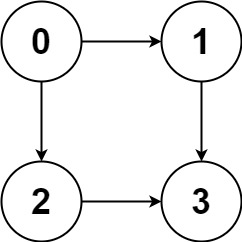
输入:graph = [[1,2],[3],[3],[]]
输出:[[0,1,3],[0,2,3]]
解释:有两条路径 0 -> 1 -> 3 和 0 -> 2 -> 3
示例 2:
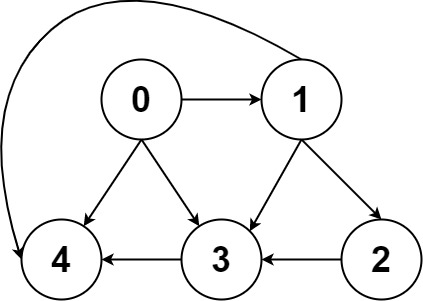
输入:graph = [[4,3,1],[3,2,4],[3],[4],[]]
输出:[[0,4],[0,3,4],[0,1,3,4],[0,1,2,3,4],[0,1,4]]
示例 3:
输入:graph = [[1],[]]
输出:[[0,1]]
示例 4:
输入:graph = [[1,2,3],[2],[3],[]]
输出:[[0,1,2,3],[0,2,3],[0,3]]
示例 5:
输入:graph = [[1,3],[2],[3],[]]
输出:[[0,1,2,3],[0,3]]
提示:
n == graph.length2 <= n <= 150 <= graph[i][j] < ngraph[i][j] != i(即,不存在自环)graph[i]中的所有元素 互不相同- 保证输入为 有向无环图(DAG)
DFS 中等
代码
class Solution:
    def allPathsSourceTarget(self, graph: List[List[int]]) -> List[List[int]]:
        def dfs(node, path):
            if node == []:
                return
            path.append(node)
            if node == n - 1:
                ans.append(path[:])
                return
            # vis.add(node)
            for nxt in graph[node]:
                # if nxt not in vis:
                dfs(nxt, path)
                del(path[-1])
        # vis = set()
        ans = []
        n = len(graph)
        dfs(0, [])
        return ans