802. 找到最终的安全状态
在有向图中,以某个节点为起始节点,从该点出发,每一步沿着图中的一条有向边行走。如果到达的节点是终点(即它没有连出的有向边),则停止。
对于一个起始节点,如果从该节点出发,无论每一步选择沿哪条有向边行走,最后必然在有限步内到达终点,则将该起始节点称作是 安全 的。
返回一个由图中所有安全的起始节点组成的数组作为答案。答案数组中的元素应当按 升序 排列。
该有向图有 n 个节点,按 0 到 n - 1 编号,其中 n 是 graph 的节点数。图以下述形式给出:graph[i] 是编号 j 节点的一个列表,满足 (i, j) 是图的一条有向边。
示例 1:
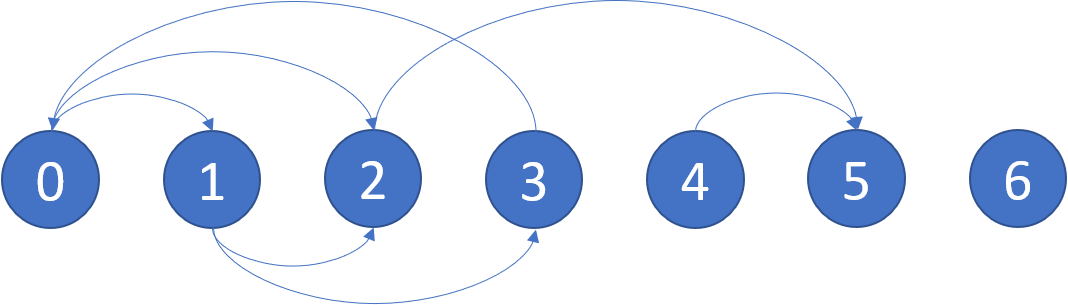
输入:graph = [[1,2],[2,3],[5],[0],[5],[],[]]
输出:[2,4,5,6]
解释:示意图如上。
示例 2:
输入:graph = [[1,2,3,4],[1,2],[3,4],[0,4],[]]
输出:[4]
提示:
n == graph.length1 <= n <= 1040 <= graph[i].length <= ngraph[i]按严格递增顺序排列。- 图中可能包含自环。
- 图中边的数目在范围
[1, 4 * 104]内。
DFS BFS 中等
代码
1. DFS
class Solution:
    def eventualSafeNodes(self, graph: List[List[int]]) -> List[int]:
        n = len(graph)
        color = [0] * n
        def dfs(i)->bool:
            if color[i] > 0:
                return color[i] == 2
            color[i] = 1
            for nei in graph[i]:
                if not dfs(nei):
                    return False
            color[i] = 2
            return True
        return [i for i in range(n) if dfs(i)]
2. 拓扑排序
class Solution:
    def eventualSafeNodes(self, graph: List[List[int]]) -> List[int]:
        n = len(graph)
        iG = [ [] for _ in range(n) ] # 反向图
        ic = [0] * n # 图的入度图
        for s, es in enumerate(graph): # start, end
            for e in es:
                iG[e].append(s)
                # ic[e] += 1
            ic[s] = len(es)
        q = deque([i for i, n in enumerate(ic) if n == 0])
        while q:
            cur = q.popleft()
            for nei in iG[cur]:
                ic[nei] -= 1
                if ic[nei] == 0:
                    q.append(nei)
        return [i for i, n in enumerate(ic) if n == 0]